Fu Haifeng Net Worth 2026 - How China's Olympic Smash King Built a Career Beyond the Court
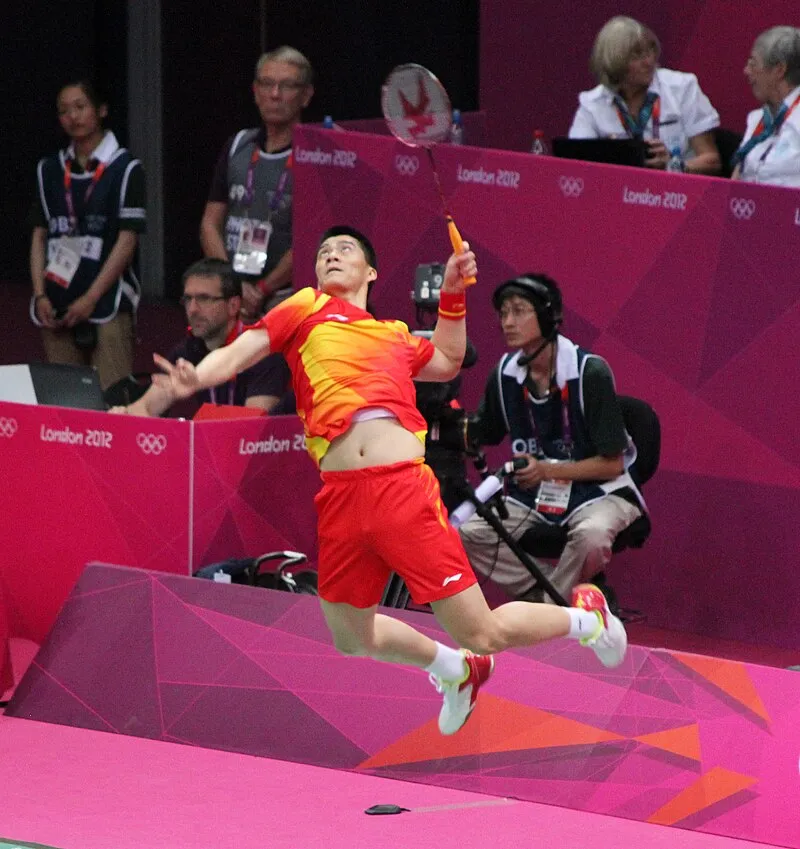
Photo of Fu Haifeng, via Wikimedia Commons
Fu Haifeng Net Worth 2026 - How China's Olympic Smash King Built a Career Beyond the Court
If badminton had a highlight reel built entirely around power, Fu Haifeng would occupy a disproportionate share of it. The Chinese men's doubles specialist became internationally known for a smash that was, at its peak, among the fastest shuttle strikes ever recorded — a weapon that helped him and partner Cai Yun dismantle opponents at the highest levels of the sport throughout the mid-2000s and beyond. By the time he claimed Olympic gold on home soil at the 2008 Beijing Games, Fu Haifeng had secured his place in badminton history.
 Photo: Cai Yun, via c8.alamy.com
In 2026, his financial standing reflects the compound rewards of that elite career: state-system compensation, endorsement income, post-retirement coaching fees, and the institutional benefits that China reserves for its most accomplished Olympic champions. Analysts estimate Fu Haifeng's current net worth at approximately $3 million to $5 million USD.
The Making of an Olympic Champion
Fu Haifeng was born in 1983 in Guangdong Province, a region with a strong badminton culture that has produced numerous national team members over the decades. He entered the Chinese national training system as a young player and developed rapidly into one of the country's premier men's doubles prospects, eventually forming a partnership with Cai Yun that would become one of the most feared combinations in international badminton.
The Cai Yun and Fu Haifeng pairing — often referred to simply as "Cai/Fu" in tournament brackets — dominated men's doubles during the second half of the 2000s. They won the 2006 BWF World Championships, collected multiple Super Series titles, and delivered China its men's doubles gold medal at the Beijing Olympics in front of a home crowd, one of the most emotionally charged sporting moments in Chinese sports history that year.
Fu Haifeng continued competing into the early 2010s before retiring from international play, having accumulated a record that placed him firmly among the all-time greats of men's doubles badminton.
Career Earnings Within China's State Sports System
Understanding Fu Haifeng's financial profile requires a working knowledge of how China compensates its elite national athletes — a system that differs fundamentally from the open-market structures familiar to American sports fans.
Chinese national team athletes in Olympic sports receive structured compensation packages that include monthly training stipends, competition bonuses, and performance incentives tied to major championship results. For an athlete of Fu Haifeng's caliber — an Olympic gold medalist and World Champion — these packages during his competitive peak years are estimated to have provided annual income in the range of $100,000 to $200,000 USD, exclusive of prize money and endorsements.
Olympic gold medalists in China also receive substantial one-time bonuses from both the Chinese Olympic Committee and their provincial sports associations. The Beijing 2008 gold medal, given the extraordinary national significance of a home Games triumph, is believed to have triggered bonus payments well above standard rates. Conservative estimates place the total bonus income associated with his Olympic victory at $200,000 to $400,000 USD.
Cumulative BWF prize money across his career — spanning Super Series events, World Championships, and other international tournaments — is estimated at approximately $400,000 to $600,000 USD, reflecting both the growing prize pools of his era and his consistent presence in finals at major events.
Endorsements: Equipment, Sportswear, and Domestic Brands
Fu Haifeng's endorsement portfolio during his playing career was anchored by his relationship with Li-Ning, the Chinese sportswear and equipment brand that has served as the outfitter of the Chinese national badminton team for much of the past two decades. As an Olympic champion and World Champion, Fu occupied a prominent position within Li-Ning's athlete marketing hierarchy.
Li-Ning's contracts with elite Chinese national team members typically include equipment provision, apparel deals, and public appearance obligations, with financial terms for top-tier athletes estimated between $80,000 and $200,000 annually at the height of their careers. Fu Haifeng's Olympic gold medal status positioned him toward the upper end of this range during the years immediately following Beijing 2008.
Additional domestic Chinese brand partnerships — spanning categories such as health products, telecommunications, and regional consumer goods — supplemented his Li-Ning income during his peak years of public visibility. While these partnerships were less globally prominent than those commanded by individual-sport stars like Lin Dan, they contributed meaningfully to his overall earnings during his competitive career.
Total career endorsement income is conservatively estimated at $800,000 to $1.5 million USD.
Post-Retirement: Coaching China's Next Generation
Following his retirement from competitive play, Fu Haifeng made a transition that is both common and institutionally supported within China's national sports framework — he moved into a coaching role within the Chinese national badminton program.
Serving as a national team coach for men's doubles, Fu has been involved in developing the players who now represent China on the international circuit. This role carries both financial compensation and significant institutional prestige within Chinese sports culture. Senior coaching positions within the national badminton system are estimated to pay between $100,000 and $180,000 USD annually, with additional benefits including housing allowances, travel compensation, and long-term pension provisions.
His coaching work also extends to involvement in provincial-level programs and youth development initiatives, where his name and Olympic credentials carry considerable weight in attracting families and young athletes to structured training environments.
China's Sports System Pension and Long-Term Benefits
One often-overlooked component of the financial security enjoyed by elite Chinese Olympic athletes is the long-term pension and benefit structure provided by the state sports system. Athletes who represent China at the Olympic level and achieve significant results are entitled to ongoing state support that includes monthly pension payments, access to state-funded healthcare, and housing benefits in some cases.
For Fu Haifeng, whose Olympic and World Championship credentials place him at the highest tier of eligible recipients, these long-term benefits contribute meaningfully to his financial security in ways that are difficult to quantify precisely but are nonetheless real components of his overall net worth.
Media and Public Profile
Fu Haifeng has maintained a measured public presence since retiring, appearing in sports documentary content, promotional materials for Chinese badminton development campaigns, and occasional television segments tied to major international badminton events. While he has not pursued a high-profile media career in the manner of some retired athletes, these appearances generate supplementary income and sustain the public recognition that keeps him commercially relevant.
His involvement in events tied to the Chinese national badminton team — including pre-tournament media sessions and public coaching demonstrations — also contributes to an ongoing income stream that complements his primary coaching salary.
Net Worth Estimate
Aggregating his career prize money, state sports system compensation, Olympic bonuses, endorsement income, coaching salary, and long-term institutional benefits, Fu Haifeng's estimated net worth in 2026 stands at approximately $3 million to $5 million USD.
That figure may appear modest relative to the salaries commanded by American professional athletes in comparable roles, but it reflects a financial reality shaped by a different sporting economy — one in which state support, institutional prestige, and long-term benefit structures replace the open-market dynamics of the NBA or NFL. Within that context, Fu Haifeng has built a financially stable and professionally fulfilling post-athletic life that honors the legacy of one of badminton's most electrifying competitors.