Rudy Hartono Net Worth 2026 - The Wealth Behind Badminton's Greatest Champion
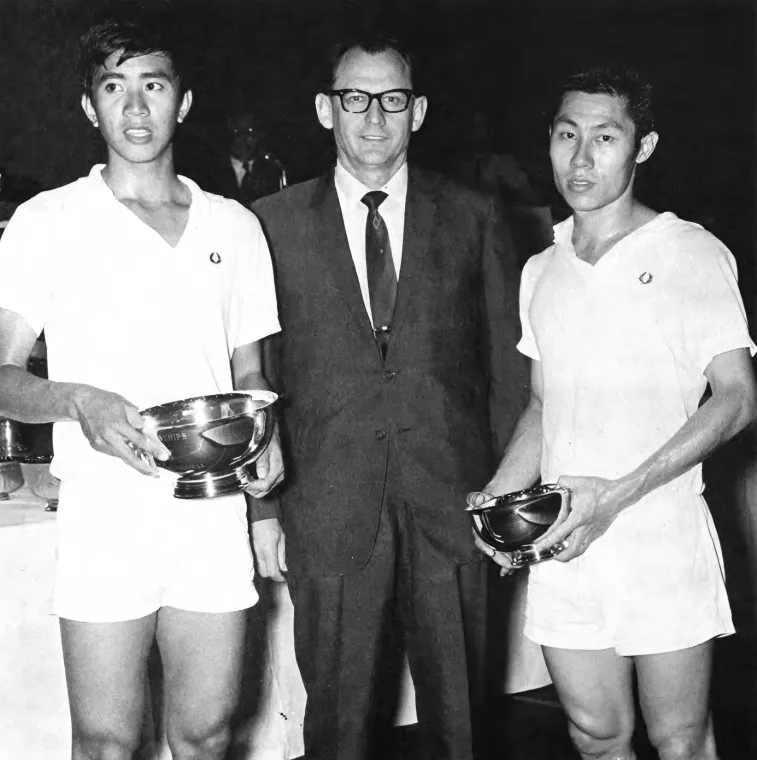
Photo: Unknown authorUnknown author, Public domain, via Wikimedia Commons
To understand Rudy Hartono's financial standing in 2026, one must first appreciate the historical context in which his wealth was built. Born on August 18, 1949, in Surabaya, Indonesia, Hartono competed in an era when professional badminton bore almost no resemblance to the commercially sophisticated circuit that exists today. Prize money was negligible by modern standards, global television contracts were nonexistent, and the concept of a badminton player as a branded commercial entity was largely foreign.
And yet, through a combination of unmatched competitive achievement, sharp business instincts, and an enduring legacy that has proved remarkably durable, Hartono has accumulated an estimated net worth of $4 million as of 2026. That figure demands to be read not as a straightforward sum but as the product of a lifetime of strategic financial navigation in a sport that has changed almost beyond recognition since his playing days.
The Record That Started Everything
For American sports fans, the most useful analogy for Hartono's dominance might be a hybrid of Michael Jordan and Wayne Gretzky — an athlete so far ahead of contemporaries that the records he set seemed, at the time, unbreakable. His eight All England Open titles, including seven consecutive victories from 1968 to 1974, remain the most celebrated achievement in the history of the sport. He added a World Championship title in 1980, the inaugural year of that tournament.
In the pre-Open era of badminton, the All England was the undisputed pinnacle of the sport — equivalent, in prestige terms, to Wimbledon in tennis. Winning it once was a career achievement. Winning it eight times, across a span that covered the better part of two decades, placed Hartono in a category entirely his own.
Those victories generated relatively modest direct financial rewards by contemporary standards. However, they established a brand equity — a name recognition and associative prestige — that would prove commercially valuable for decades to come.
Career Earnings in Historical Context
It would be misleading to apply contemporary prize money benchmarks to Hartono's competitive career. The BWF's professionalized prize structure did not exist during his peak years, and the tournaments he dominated offered honoraria and modest cash prizes rather than the six-figure winner's checks that today's elite players collect.
Historical estimates suggest that Hartono's total competitive earnings, adjusted for inflation, amounted to approximately $300,000 to $500,000 across his playing career — a fraction of what a player of equivalent dominance would earn today, but a meaningful sum within the economic context of 1970s Indonesian society.
What those earnings could not provide, his post-playing career more than compensated for.
Business Ventures: Building Wealth After the Court
Hartono's transition from competitive player to businessman was both natural and strategically executed. Returning to Indonesia following his competitive career, he leveraged his national hero status — badminton occupies a place in Indonesian culture comparable to basketball in the United States, and Hartono remains its most revered figure — to establish business interests across several sectors.
His involvement in the textile and manufacturing industry, historically one of Indonesia's most significant economic sectors, provided a substantial foundation for his post-playing wealth. Business associates and Indonesian sports journalists have consistently identified manufacturing and trade as the primary source of Hartono's commercial fortune, with estimates placing the value of these interests at $1.5 to $2 million in current terms.
Real estate investments in Surabaya and Jakarta — Indonesia's two largest cities, both of which have experienced significant property appreciation over the past three decades — have added further value to his portfolio. Property holdings are estimated at approximately $800,000 to $1.2 million at current market valuations.
Coaching, Ambassadorial Roles, and the Legacy Economy
Hartono's name has never ceased to carry commercial weight within the badminton world. His role as an ambassador for the sport — attending major tournaments, participating in ceremonial functions, and lending his endorsement to equipment and apparel brands — generates income that industry observers estimate at $100,000 to $200,000 annually.
His involvement with the Badminton Association of Indonesia (PBSI) in advisory and mentorship capacities has kept him connected to the sport's institutional infrastructure, while his appearances at badminton clinics and coaching programs — particularly those targeted at developing Indonesia's next generation of champions — carry both financial compensation and the intangible value of sustained public visibility.
International appearances and documentary participation, including his involvement in retrospective features produced by Asian sports broadcasters, have added modest but consistent income streams that reflect the enduring global fascination with his era and his records.
The Hartono Legacy in Badminton's Commercial Evolution
Perhaps the most significant dimension of Hartono's financial story is the role he played, however indirectly, in badminton's eventual professionalization. His dominance in the 1970s helped elevate the sport's global profile, contributing to the conditions that would eventually attract the commercial investment that modern players benefit from. Players like Viktor Axelsen, who earn millions annually from sponsorships and league contracts, are in some meaningful sense building on the foundation that Hartono and his contemporaries constructed.
That historical significance does not translate directly into dollars — Hartono does not receive royalties for the sport's growth — but it does ensure that his name remains relevant, his appearances sought after, and his brand equity intact in a way that purely commercial athletes of his era often cannot sustain.
Estimating the 2026 Net Worth
Pulling together the threads of his financial story — business interests accumulated over four decades, real estate holdings in two of Asia's fastest-growing cities, ongoing ambassadorial and appearance income, and the residual value of a legacy that shows no sign of fading — Rudy Hartono's estimated net worth in 2026 stands at approximately $4 million.
For a player who competed in an era before professional badminton existed in any meaningful financial sense, that figure represents a remarkable achievement. It is the product not of the sport's current commercial infrastructure but of one man's ability to convert athletic greatness into lasting economic value through intelligence, adaptability, and the sheer enduring power of a record that half a century has not diminished.
In badminton's long history, no player has been more influential. In the financial history of the sport, few stories are more instructive.